Let’s Talk About Your Smart Home Project
Tell us about your vision, and we’ll create a seamless solution for your home.

(253) 307-3809
Tuesday, October 27, 2026
The Hidden Work Behind a Flush-Mounted Frame TV
A customer named Beth found Hutter Home Theater through its website and sent an email asking for help with two Samsung Frame TVs. She wanted the gallery look: a television that disappears into a piece of art on the wall, not a black rectangle with cables hanging out of it.
David Hutter and his installer John went out to look at the space. What they found turned into one of those jobs that looks simple from a photo and is anything but simple to actually pull off.
The Bedroom: A TV That Disappears When It's Not in Use
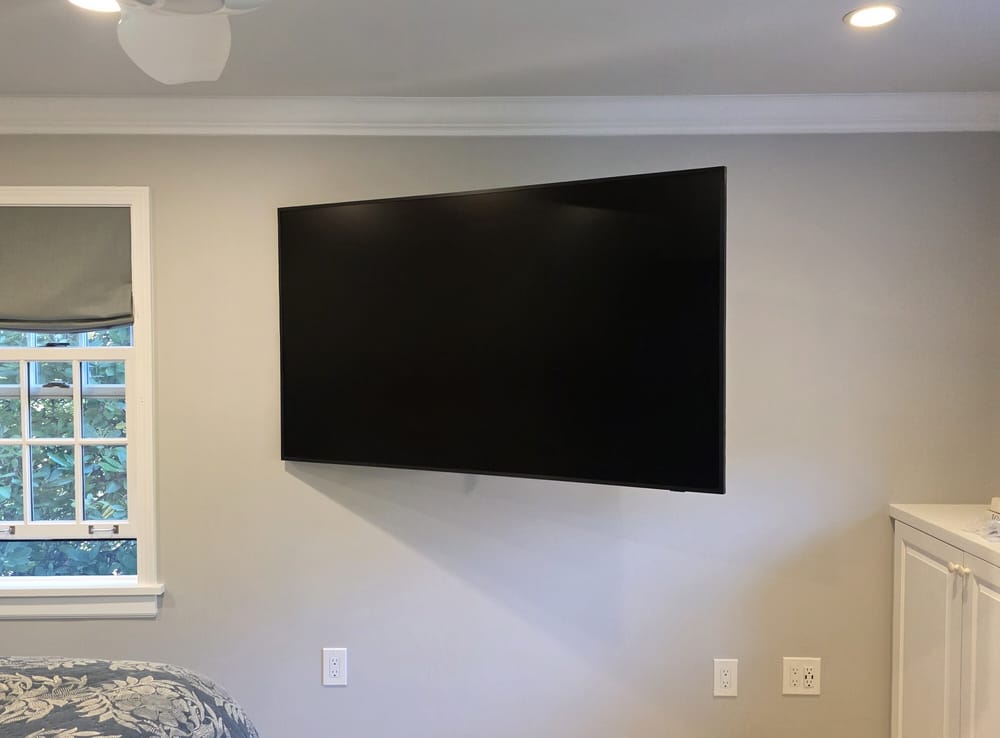
The first Frame TV was going into the bedroom, on the sidewall roughly ten feet from the headboard. The existing setup used an articulating mount, the kind that lets a TV pull out from the wall and angle toward the bed, then push back flat against the wall when it's not needed.
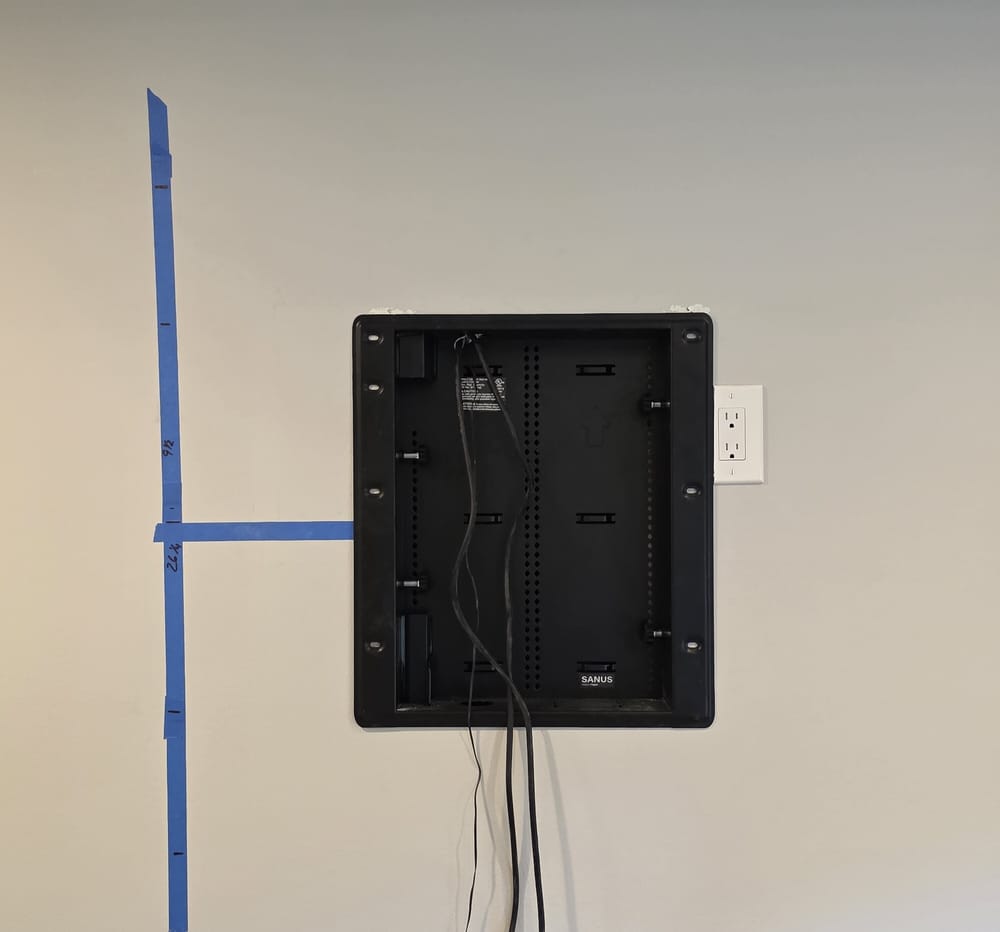
Beth asked if that articulating mount could be recessed, so the TV would sit flush with the wall like a piece of art instead of sticking out several inches. The answer was yes, but it takes the right hardware for the job. Hutter Home Theater specified a recessed in-wall mount system from Sanus, built specifically to let an articulating arm fold back into a pocket in the wall rather than hanging off the surface. Once Beth saw it, she was sold.
The Family Room: When Flush Isn't Actually Flush
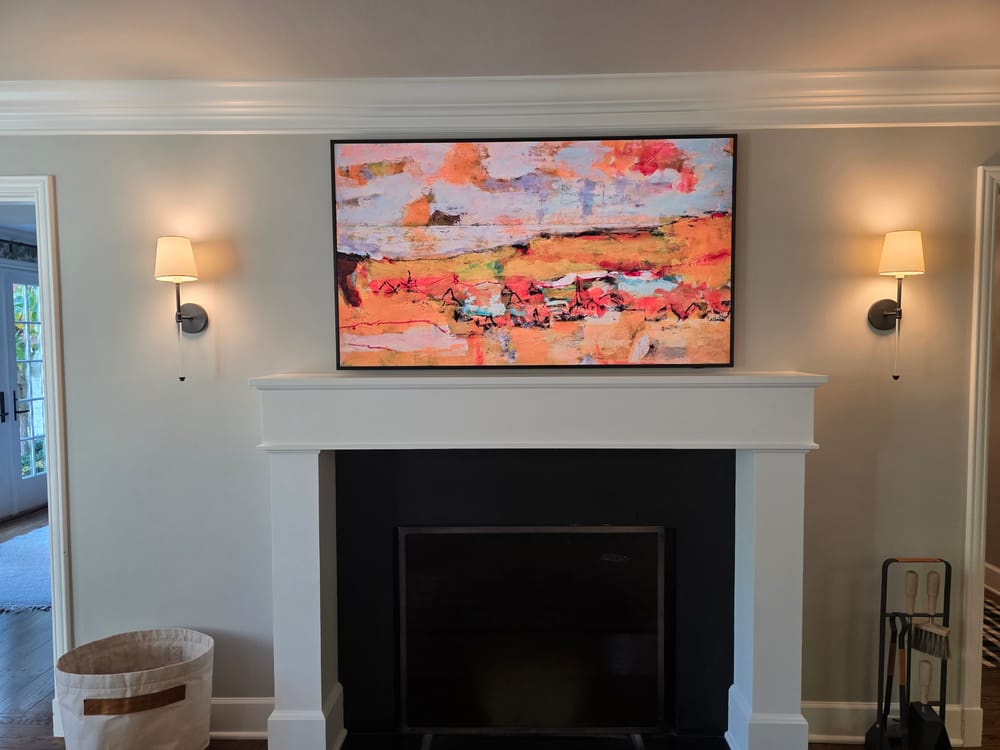
The second Frame TV, a 65 inch model, was going above the fireplace mantle in the family room, replacing an older Samsung TV already in that spot. The team mounted it using the existing mount, the same one that had held the TV there before.
The customer looked at it and said what he was thinking in plain terms: "I don't love this."
He was right to say something. The TV wasn't sitting flush against the wall the way a Frame TV is supposed to. The reason came down to what was hiding behind it: a set of electrical outlets sat directly behind the television, and the existing mount had to clear them and the electrical cord stuck out of the wall we needed a gap for the cord to stick out of the electrical outlets. That gap between the TV and the wall is exactly what breaks the illusion. A Frame TV that floats an inch or two off the wall doesn't read as a piece of art. It reads as a TV on a bracket.
The Fix: Moving the Power, Not the Television
Getting the TV truly flush meant dealing with the outlets, not working around them. Hutter Home Theater is a licensed electrical contractor, which matters here: this wasn't a job of hiding a cord, it was a job of relocating power inside the wall.
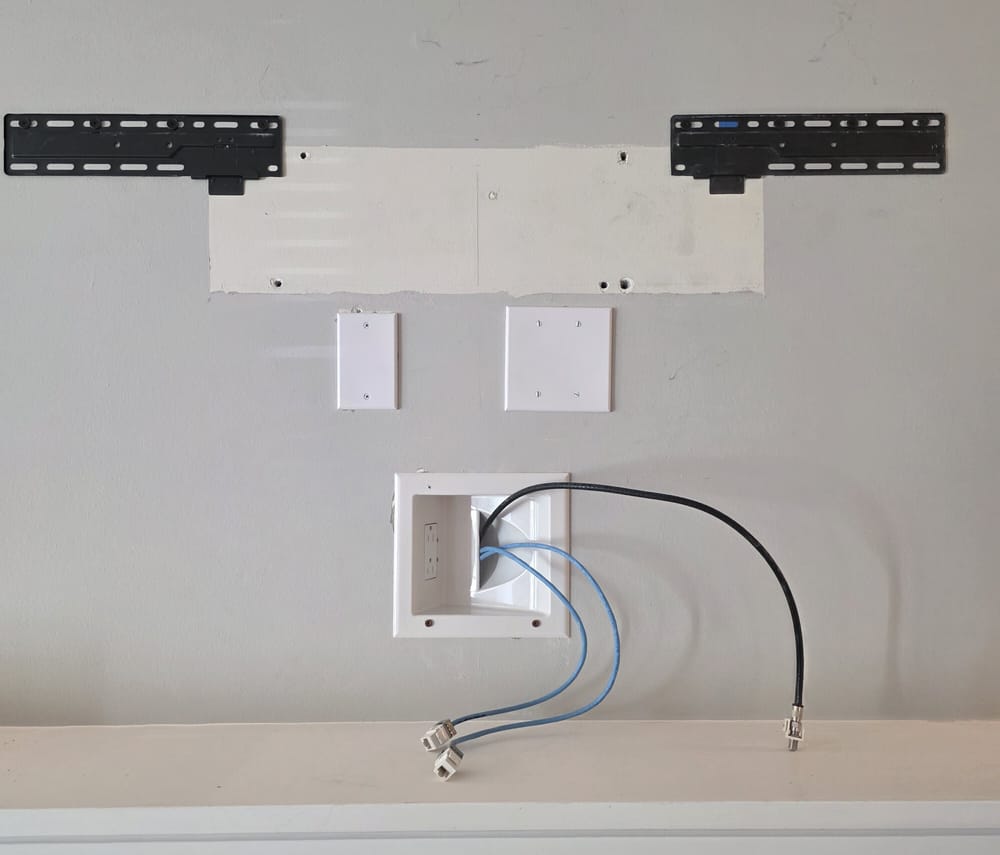
The team installed a combination low voltage and power recessed box, set into a new location in the wall cavity. That box lets the TV's power cord plug in and stay completely hidden, with nothing protruding past the wall surface. With the outlets relocated, the team switched from the original mount to the mounting hardware that comes with the Samsung Frame TV itself. That swap mattered for more than just getting the TV flush: the original mount had to sit above the outlets, which limited how low the TV could go. Samsung's own mount is built differently, and it gave the team the room to actually place the television where the customer wanted it, exactly one inch off the mantle, instead of wherever the old mount's design happened to allow.
The result: a 65 inch Frame TV sitting dead flush against the wall above the fireplace, with no visible hardware, no gap from the wall to the TV, and no outlets in sight.
Why a Flush Frame TV Is Harder Than It Looks
A Frame TV or an LG Gallery TV earns its art-on-the-wall look by hiding everything a normal TV install shows off: the mount, the cables, the gap behind the screen. That look is the hardest part of the job, not the easiest.
Part of the difficulty is mechanical. A Samsung Frame TV mounts using two separate pieces, one on the TV itself and one on the wall, rather than a single bracket. Both pieces have to be measured and positioned independently and with precision. If either one is off by even a small amount, the TV won't sit flush when the two pieces come together, and there's no adjusting it after the fact the way you can nudge a traditional mount.
The other part of the difficulty is almost always power. Outlets, cable boxes, and low voltage wiring are rarely located exactly where a flush mount needs them to be, which means relocating power inside the wall is often part of the job, not an exception to it. That takes a licensed electrician, not just an installer with a stud finder.
A Job Hutter Home Theater Has Done Many Times Over
This wasn't the first flush Frame TV or Gallery TV install for Hutter Home Theater, and it won't be the last. The company has documented somewhere between 50 and 100 of these installations over the years, mounted on drywall, tile, brick, and nearly every other surface a South Sound home can throw at an installer.
That experience is exactly why jobs like Beth's two Frame TVs come together smoothly. Knowing in advance that power will likely need to move, that two-piece mounts demand careful measurement, and that a licensed electrical contractor can solve problems a typical AV installer can't, turns a job that looks intimidating on paper into one with a predictable, clean outcome.
Show Me What My Home Could Feel Like ↓
Take just 3 quick questions and tell Hutter Home Theater about the space, the TV you're picturing, and the look you want on your wall. From there you will get a plan built around your exact layout, including a look at power, mounting, and anything else standing between you and a truly flush installation.
Learn more about custom home theater and TV installation, networking for systems that depend on a stable connection, and whole home automation that ties it all together.
Family Room
Before the TV went up: the outlets relocated and a recessed low-voltage and power box set into the wall, so the cord stays hidden and the TV can sit dead flush.
Bed Room
Before the TV went up: the recessed in-wall box from Sanus that lets the articulating arm pull out toward the bed, then fold flush back into the wall.

Hi, I'm David
Founder, Hutter Home Theater
Most of my work comes through referrals, and this blog is a way to share my knowledge with more families in the Seattle–Tacoma area. If you’re ready for a theater, smart lighting, or whole-home automation, I’d love to help you get started.
Ready to Start Your Project?
From custom theaters to smart home automation, I’ll help design a system tailored to your lifestyle. Let’s talk about your vision and bring it to life.
Stay Updated with Smart Home Insights
Subscribe to get the latest articles, updates, and tips delivered straight to your inbox.
We’ll only send relevant updates. Unsubscribe anytime.

© 2026 Hutter Home Theater. All Rights Reserved.